0086 15335008985

-
 تلفن:
تلفن: -
 ایمیل:

 جستجو
جستجو
خانه / خبر / اخبار صنایع / Small Pneumatic Actuator Selection Guide: Key Specs, Torque, and Sizing Tips
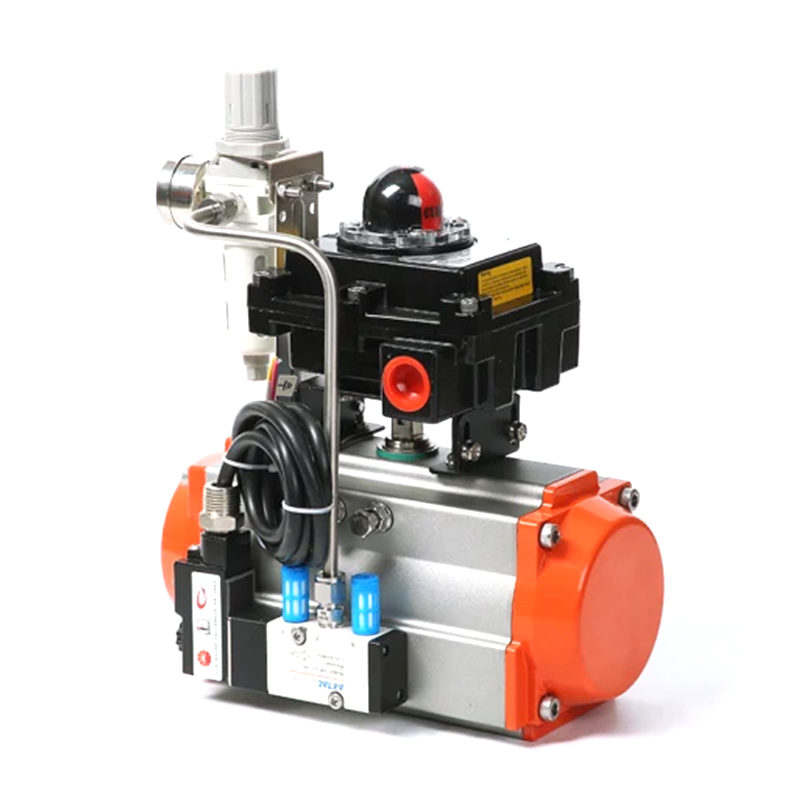
Small Pneumatic Actuator Selection Guide: Key Specs, Torque, and Sizing Tips
A maintenance engineer at a water treatment plant has to automate a 1-inch ball valve inside a cramped skid. The valve's break torque is roughly 12 Nm, the available air supply is 80 psi, and the space is barely larger than a coffee mug. A small pneumatic actuator looks like the right answer, but the wrong choice can lead to a valve that jams, a stem that shears off, or seals that fail in less than three months.
Here is the conclusion up front. Specifying a small pneumatic actuator comes down to two fundamentals : matching the actuator's torque curve to the valve's actual break torque, and ensuring that clean, dry compressed air at the rated pressure can reach the unit. Materials, mounting, and accessories all follow from those two decisions.
What Defines a Small Pneumatic Actuator?
A small pneumatic actuator is not defined by physical dimensions alone. In the rack and pinion family, the term typically refers to units with a torque output of about 4 to 32 Nm, with body bore sizes from 32 mm to 52 mm. These actuators drive quarter-turn valves up to roughly 2 inches, where the required motion is a simple 90-degree rotation.
Small pneumatic actuators appear in a wide range of industrial settings: ball valves in water skids, butterfly valves in HVAC systems, and compact valve assemblies on OEM equipment. When the process requires a fail-safe action, a spring return unit in this range still fits into tight installations.
| Model | Torque Range (Nm) | Body Size (mm) | Typical Valve Size |
|---|---|---|---|
| AKT-32 | 4-8 | 32 | 1/2 in ball |
| AKT-40 | 8-16 | 40 | 3/4-1 in ball |
| AKT-52 | 18-32 | 52 | 1-1.5 in ball |
| AKT-63 | 32-50 | 63 | 1.5-2 in ball |
Within this class, the AKT series rack and pinion pneumatic actuator is a common choice because it provides a smooth, uniform torque curve and small frame sizes that bolt directly onto standard ISO 5211 valve flanges.
 AKT Series Rack and Pinion Pneumatic Actuator for ISO 5211 Mounting This actuator offers a uniform torque curve and compact frame sizes that bolt directly onto standard ISO 5211 flanges, making it a reliable choice for automating small ball valves with smooth operation. View Product →
 Selection Criteria That Matter
Torque Matching
Every valve has a break torque, which is the peak force needed to start moving the ball or disc from its closed position, and a running torque, which is lower. Small ball valves in wet service can show break torques from 8 to 15 Nm. Multiply that by a safety factor of 1.3 to 1.5 for clean water or air, and 2.0 or higher for slurry or viscous media. The number you end up with is the minimum actuator output at your supply pressure.
Air Supply Quality and Pressure
Most small pneumatic actuators are rated for 4 to 7 bar, or 58 to 101 psi. Pressure, however, is only half the picture. Air quality decides how long the actuator will actually live. Dust, moisture, and lubricant carryover from a compressor degrade internal seals, slow down cycling, and eventually cause the actuator to stick or leak. A filter regulator is not optional in continuous-duty plants.
Spring Return Versus Double Acting
A double acting actuator uses compressed air to move the valve in both directions. It is smaller, lighter, and less expensive. A spring return actuator uses air to open and springs to close, giving a fail-safe position when the air supply is lost. For safety-critical isolation, spring return is the standard choice, even though the actuator body is larger at the same torque output.
Surface Treatment and Materials
Hard-anodized aluminum is the industry baseline for small pneumatic actuator bodies. It holds up well in dry, indoor environments. For marine, chemical, or outdoor installations, stainless steel barrels and shafts prevent pitting and corrosion that can lock the actuator in place after years of service. Choosing the right surface treatment is a cost decision that is easy to get wrong, so it helps to review how to choose pneumatic actuators for harsh industrial environments .
A Small Pneumatic Actuator Sizing Example
Take a 1-inch flanged ball valve in a water supply line. The manufacturer lists the break torque at 10 Nm. Since the line runs continuously, a safety factor of 1.5 applies, which means the actuator needs to deliver at least 15 Nm at the plant's working pressure.
The next available rack and pinion frame size in the AKT range outputs roughly 18 to 24 Nm at 6 bar. That is a comfortable margin without going overboard. An actuator rated at 30 Nm or more would still rotate the valve, but the extra force would stress the stem and packing over time. Oversizing a small pneumatic actuator is a real failure mode, especially on brass or plastic valve bodies.
For a compact assembly around this size, a Q611F pneumatic threaded ball valve integrates cleanly with the actuator and keeps the total length short in spaces where room is limited.
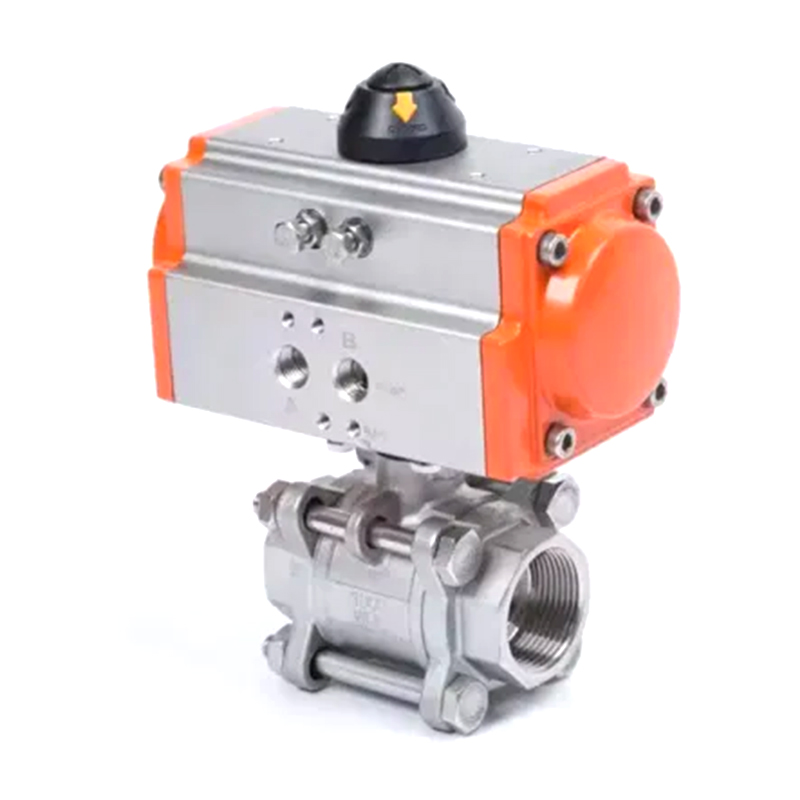 Q611F Pneumatic Threaded Ball Valve with Compact Design This threaded ball valve integrates with the actuator to keep total length short in tight spaces, featuring an elastic seat seal and a bottom-mounted stem for reliable, easy operation. View Product →
 Mounting and Accessory Integration
Nearly all modern small pneumatic actuators use the ISO 5211 mounting standard. Small frame sizes typically use F03, F04, and F05 patterns, letting the actuator bolt straight onto the valve's mounting flange with a coupling or socket. No custom brackets are needed.
The NAMUR interface on the side of the actuator accepts direct-mounted solenoid valves. That reduces assembly time, minimizes potential leak points, and keeps the overall footprint compact. If position feedback is required, a limit switch box mounted on top sends an open or closed signal to the controller. When modulating control is needed, a positioner turns a 4-20 mA or 0-10 V signal into a proportional air pressure, holding the valve at an intermediate position.
A filter regulator installed between the supply line and the solenoid valve provides clean, consistent air, which is the single most effective way to extend actuator life in demanding environments.
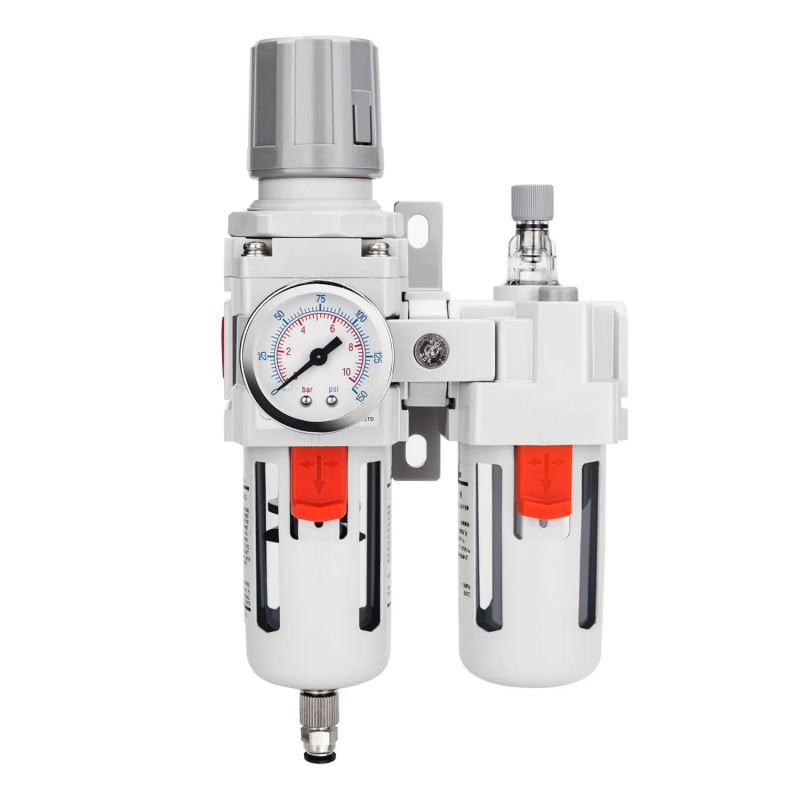 Pneumatic FRL Unit for Clean, Regulated, Lubricated Air This filter-regulator-lubricator assembly ensures consistent air quality to extend actuator life, removing particulates, stabilizing pressure, and adding controlled lubrication to protect internal surfaces. View Product →
 When a Small Pneumatic Actuator Beats an Electric One
If the plant already has compressed air, a small pneumatic actuator offers clear advantages: faster open and close cycles, true fail-safe spring return without a battery backup, and simple on/off control through a solenoid. The working principle is straightforward: air pressure pushes a rack and pinion gear set, creating a torque that rotates the valve stem. This mechanical simplicity makes it easy for maintenance staff to diagnose and repair.
Electric actuators make sense when air infrastructure is absent and precise digital positioning is required. But when the process only needs open/close, or a fail-safe cycle after a power loss, pneumatic is often the more economical and robust route. It is worth reviewing why use pneumatic valve actuators in automated valve systems before deciding.
Common Specification Mistakes
Buying by valve size instead of torque is the most frequent error. A 2-inch butterfly valve may need only 10 Nm, while a 1-inch ball valve with a significant differential pressure across the ball can need 20 Nm. Sizing an actuator based purely on port size leads to binding, slow cycling, or valve seat wear.
Skipping the filter regulator is another costly mistake. A small pneumatic actuator running on unclean air experiences premature O-ring wear, slower cycling, and internal corrosion. The price of a filter regulator is a tiny fraction of the actuator's cost, but it repays itself through longer service intervals.
Oversizing also causes trouble. Excessive torque can twist the valve stem, deform the ball seat, or damage the packing. Always compare the actuator output to the valve's maximum allowed stem torque before purchase.
Ambient conditions matter as well. In cold climates, moisture in the air supply can freeze inside the actuator and prevent cycling. Selecting a dryer and a suitable torque margin up front prevents winter shutdowns.
Practical Checklist Before Ordering
- Confirm the break and running torque of the valve from the manufacturer's datasheet.
- Apply a safety factor of at least 1.3, and more for harsh media.
- Check the maximum allowable stem torque to avoid oversizing.
- Verify plant air supply pressure and available flow rate.
- Install a filter regulator and, if needed, an air dryer upstream.
- Decide between spring return and double acting based on fail-safe requirements.
- Select materials that match the environment: indoor, outdoor, marine, or chemical.
- Confirm the ISO 5211 mounting pattern matches the valve flange.
- Choose the required accessories: solenoid, limit switch, positioner, or all.
Frequently Asked Questions
Q1: What is the smallest pneumatic actuator?
The smallest common frame size in rack and pinion designs has a body bore of roughly 32 mm and outputs about 4 to 8 Nm at 6 bar. These units are normally applied to 1/2-inch and 3/4-inch ball valves in compact automation skids.
Q2: How much air pressure does a small pneumatic actuator need?
Most small pneumatic actuators are rated for 4 to 7 bar, which is 58 to 101 psi. Torque output varies with supply pressure, so a regulator is used to keep the inlet pressure stable and prevent over-torquing.
Q3: Can a small pneumatic actuator handle precise positioning?
Yes. By adding a positioner and a feedback limit switch box, a small rack and pinion actuator can provide proportional control even in compact piping systems. The actuator, valve, and positioner need to be tuned together to avoid hunting or oscillation.
Q4: How long do small pneumatic actuators last?
With clean, dry air and a filter regulator, a rack and pinion actuator can perform millions of cycles. The actual service life is decided largely by air quality, ambient temperature, and whether the actuator is properly sized for the valve.
پست قبلی
No previous article
محصولات مرتبط
-
-
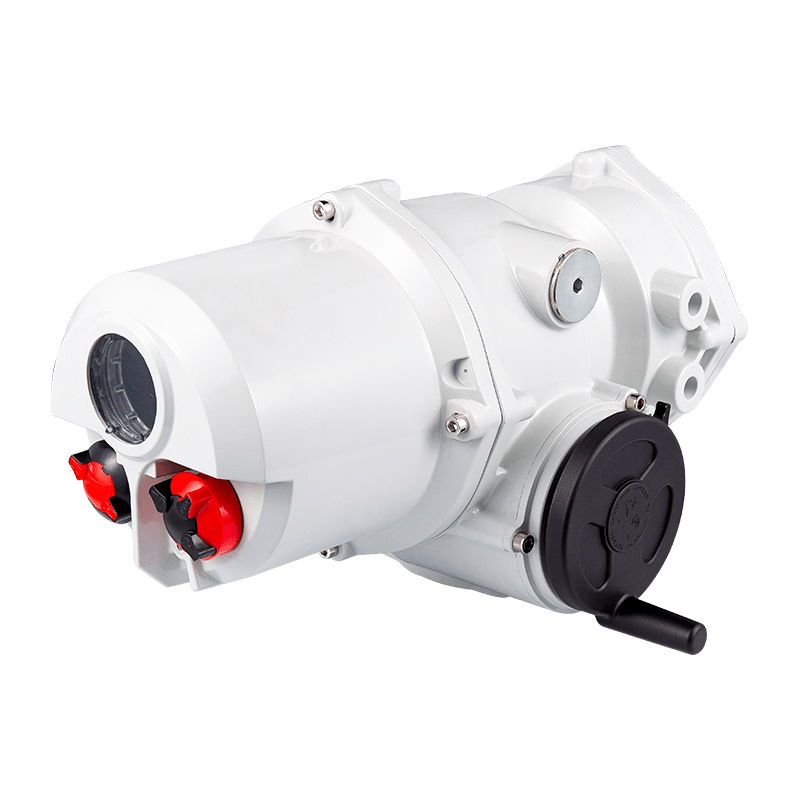
Cat:محرک برقی چهارم به نوبه خود
Aukema تا حدی محرک الکتریکی هوشمند در حال چرخش دارای دو نوع کنترل است: نوع سوئیچ هوشمند AKQ و نوع تنظیم هوشمند AKQM. ...
جزئیات را مشاهده کنید -
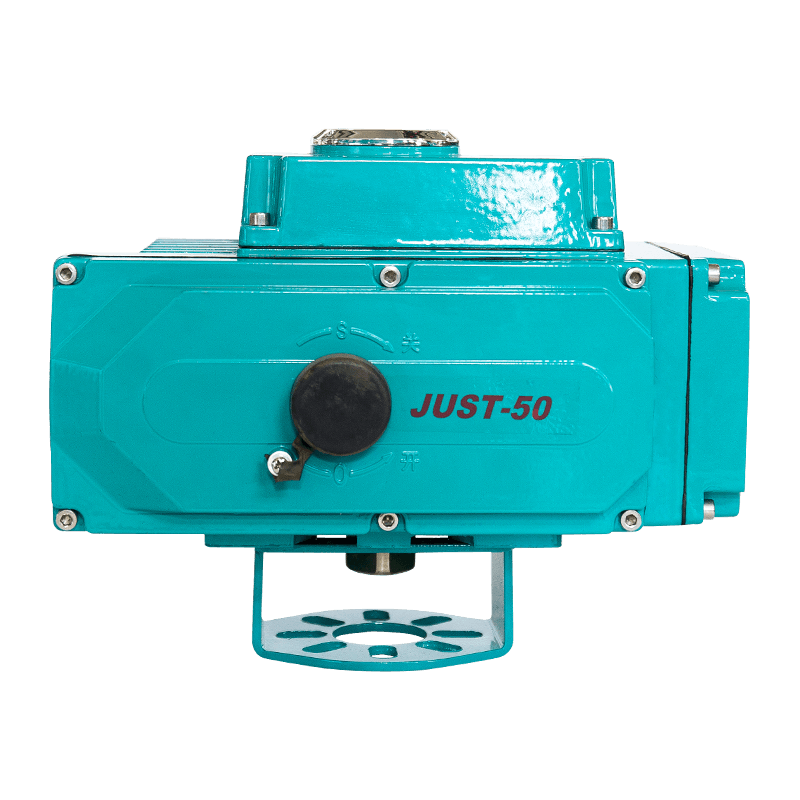
Cat:محرک برقی چهارم به نوبه خود
در مقایسه با محصولات مشابه ، محرک الکتریکی سری QC سری QC دارای عملکرد مطلوب و مزایای غیرقابل انکار است. ظاهر آن نفیس ...
جزئیات را مشاهده کنید -
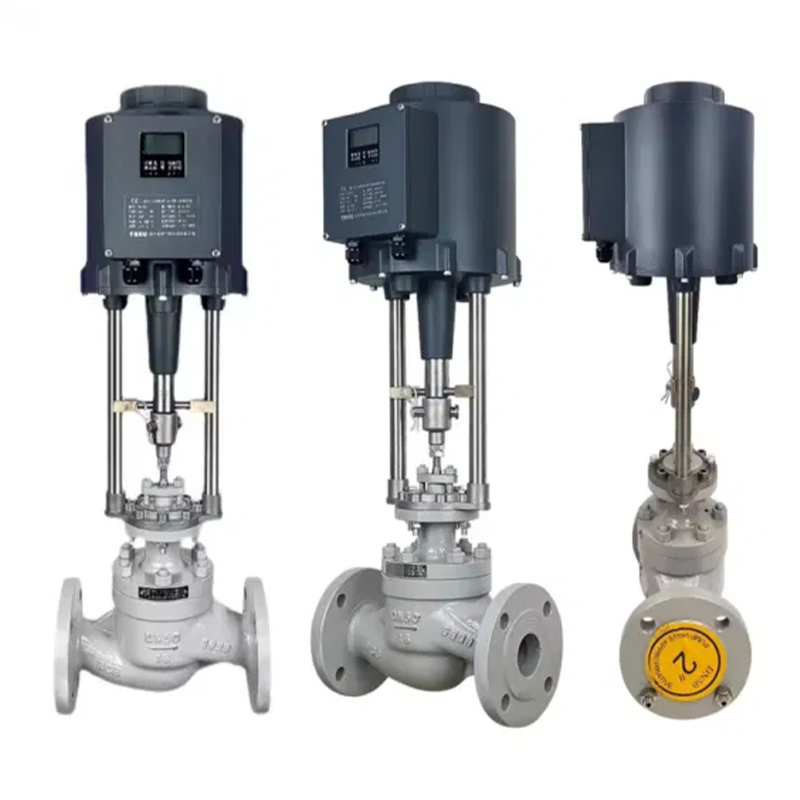
Cat:محرک برقی
به طور عمده در زمینه صنعتی مورد استفاده قرار می گیرد ، مجهز به سیستم کنترل محرک سوپاپ هوشمند Keyou A8 جدید ، دارای عم...
جزئیات را مشاهده کنید
با ما تماس بگیرید
آینده محصول را با ما شکل دهید!

پیوندهای سریع
اطلاعات تماس
- آدرس پارک صنعتی لائولی ، دهکده چاوینگ ، شهر پل هنگشان ، منطقه ووجین ، شهر چانگژو ، استان جیانگسو ، چین
- تلفن 0086 15335008985
- ایمیل
متحرک

کپی رایت 2024 شرکت تجهیزات کنترل اتوماتیک Changzhou Xinneng ، با مسئولیت محدود کلیه حقوق محفوظ است.
